







When a Regulated Market Shuts Down: What Brazil’s Betting Ban Means for Affiliates
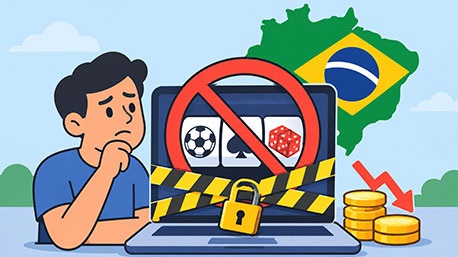
Before the 25th September 2026, Brazil had a similar licensing system to Sweden’s regarding online betting. But on that date the government introduced a nationwide ban after only having had the licence system for 2 years.
This brings several new problems for affiliates working in and towards Brazil. Many questions arise, like what are they still allowed to do? Is the ban permanent? And for players, the important question is how to know if the betting sites are for real or fake.
Provisional Measure 1,394 targets promotion as well as operation
But it’s not only betting companies that are affected. The ban also makes it illegal to promote betting, to make it easier for people to find betting sites. According to the Finance Ministry’s explainer on the new betting rules, this applies to both online games and sport betting. They also cover foreign companies aiming at players in Brazil. As a result of the ban, all betting websites and apps were commanded to shut down operations from the 6th of October.
According to Congress’s summary, the measure also bans advertising, sponsorship, and payments that are related to bets like this. The measure also creates a committee of government agencies with the task to monitor illegal betting activities and advertising.
This is where it gets complicated for affiliates. The whole purpose of an affiliate organisation is to help people find betting sites and online casinos. Intermediation and advertising are named in the measure itself. But whether a specific affiliate arrangement is affected is an open question for legal counsel.
Why did unlicensed sites multiply after the shutdown?
Unlicensed betting sites multiplied in Brazil around the ban because illegal operators saw an opening as the licensed market was about to close. Licensed brands were there to be copied. As Affiliate Guard Dog previously reported, a monitoring service run by formerly licensed operators identified 1,689 new illegal sites on the day after the measure. The peak was 2,317 sites and came on the Thursday before the announcement.
Some of the sites had borrowed names that were approved by the Finance Ministry at the time. But in these cases, it was the same brands but different domains, and one fake H2bet site even displayed a seal claiming Finance Ministry approval.
Congress and the Supreme Court still control the timeline
Right now, Brazil’s Supreme Court is looking into whether the betting ban follows the constitution of the country. Some decisions against the ban have already been made by some lower courts.
It was Supreme Court Justice Luiz Fux that therefore decided to put these court cases on hold until the Supreme Court reaches a final decision.
At the same time the Congress has not yet started the formal review of the ban. The deadline for deliberation runs to 4 March 2027 after an extension, and on 19 November 2026 the measure’s progress in the National Congress still showed it awaiting the installation of the Joint Committee.
Sweden chose a different path: licensing that players can verify
Sweden introduced its gambling licence system on 1 January 2019. By then about 60 companies had received licences. They were not all “clean”: some had broken gambling rules in other countries, which is why they were given licences for only two years instead of five.
According to the Swedish Gambling Authority’s 2025 channelisation report, most gambling in Sweden takes place with licensed companies:
- 84 % of gambling in the market open to competition
- 96 % of sports betting
- 81 % of online casino gambling
These numbers show how much gambling takes place with licensed companies, not how many individual players use them. Online casino is the weakest segment there too.
How a Swedish licence can be checked
In Sweden, players can easily check whether a gambling website has a licence: licensed websites must show the regulator’s logo and the Spelpaus logo. Players who feel that they gamble too much can take a break through Spelpaus, which means that they block themselves for a chosen amount of time. When a casino company gets a new customer, it has to check that the player is not on a break before letting them play.
The Swedish Gambling Authority’s public licence register matters because a logo can easily be copied. There is a step-by-step guide to how Swedish players can check a site against the licence register. It explains the logo, the Spelpaus requirement and how to search in the register. It is all written in Swedish.
It was a similar system Brazil used, but when the licences ended, the public list could no longer help players find legal betting websites. Sweden's system still works because its licences are still valid.
What affiliates with Brazilian exposure should review now
Brazil's authorities have also taken action against gambling advertisements. In late September, eight major platforms, including Google, Facebook, YouTube and TikTok, were told to remove betting ads within ten days. Authorities also removed 300 Facebook pages and 90 Instagram accounts.
Affiliates working with betting companies targeting Brazil now have to be more careful with their ads and make sure they’re not promoting betting to Brazilian players, because if they do, their ads fall under the advertising ban and need to be reviewed. The same carefulness goes for traffic. The ban also covers sending people in Brazil to betting sites. And it doesn’t matter if it happens on websites, in social media, in email, or in any other way.
However, there is still some uncertainty for affiliates about how the new rules work out in practice. One example is whether they can receive payments of earnings they made before the ban and exactly which types of advertising are affected by the ban.
For now, to be safe, affiliates need to check their websites, advertisements and agreements with the betting companies in Brazil. They may also need legal advice to investigate what they are and are not allowed to do while the ban is in force.