







Brazil Betting Ban Stays in Force After Supreme Court Review
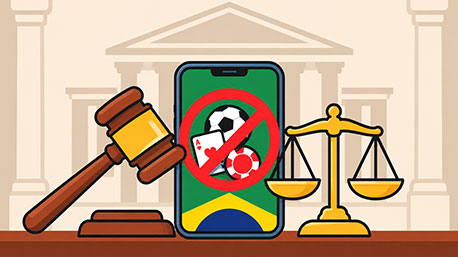
Brazil’s ban on fixed-odds betting and online casino games remains in place after the Supreme Federal Court completed a ten-hour hearing without issuing a ruling. The November 3 proceedings examined the consequences of ending the sector’s operations, including the financial impact on Brazilian sport.
Justice Luiz Fux led the public hearing, where government representatives defended the prohibition. Sports bodies and betting associations presented objections.
President Luiz Inácio Lula da Silva signed Provisional Measure 1,394/2026 on September 25. It prohibits betting operations and advertising. It also provides for the termination of existing licences. Four lawsuits challenge the measure. Three earlier cases concern Law 14,790/2023, which established the sector’s regulatory framework.
Sports Bodies Outline the Funding at Risk
CR Flamengo estimated that losing betting income could reduce its annual revenue by BRL430 million across football and Olympic sports. The club said the consequences could affect more than 1,200 employees.
Grêmio vice-president Eduardo Schumacher explained that the club relied on its main shirt sponsorship to meet salary obligations and pay creditors. The agreement also supported youth football and the women’s team. Describing its sudden disappearance, he said: “Overnight, it ceased to exist.”
Schumacher added that Grêmio had previously spent almost a year without a main shirt sponsor because other businesses had shown little willingness to invest at the level of betting companies.
The Brazilian Olympic Committee put betting revenue at approximately BRL130 million, representing 20% of its projected budget for 2027. The Brazilian Paralympic Committee also raised concerns that a funding reduction could hinder athlete development.
Ministers Cite Health Risks and Household Spending
Government officials defended the prohibition by pointing to gambling-related harm. Justice and Public Security Minister Wellington César Lima e Silva cited a Unifesp survey that identified 10.9 million Brazilians who gamble at risky levels. The survey also indicated that 1.4 million showed signs of gambling disorder.
The Finance Ministry cited an estimate from state finance secretaries that households had transferred BRL62 billion, equivalent to US$11 billion, into betting. It estimated the wider economic cost at between BRL120 billion and BRL140 billion.
Health Minister Alexandre Padilha presented the ban as a public health safeguard and said 1.2 million people had requested self-exclusion. Digital Rights Secretary Victor Oliveira Fernandes said the ministry had sought the removal of more than 36,000 illegal betting websites between September 25 and October 29.
The Justice Ministry has meanwhile restricted access to documents used to prepare the measure for five years. It refused an information request on the grounds that disclosure could endanger public safety and economic stability.
Transition Proposals Accompany the Legal Challenge
Several associations argued that prohibition could send bettors to unregulated platforms. They called for stronger supervision and spending limits. They also sought time to adjust existing contracts. UERJ Reg proposed a transition lasting 180 to 360 days if the prohibition continues.
The National Association of Games and Lotteries questioned the measure’s effects. The Finance Ministry maintained that previous regulation had failed to contain the social and economic damage.
Congress continues its review of the provisional measure. The initial deadline falls on November 23, with the possibility of a 60-day extension. Authorities have announced the joint commission, although they have yet to formally appoint a rapporteur.
Source:
Brazil Betting Ban Faces Court Scrutiny, lcb.org, November 8, 2026.