







Brazil Betting Ban Brings Court Challenges and Illegal Surge
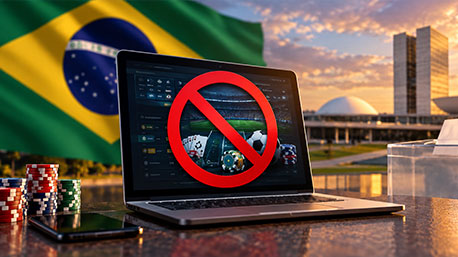
Brazil’s decision to suspend its recently regulated online betting market has quickly developed into a broader dispute involving licensed operators, industry associations, government institutions and concerns over the growth of illegal gambling websites. President Luiz Inácio Lula da Silva introduced Provisional Measure 1,394 on September 25, setting in motion a shutdown of an industry that had operated under a nationwide licensing framework since January 2025.
The measure immediately stopped licensed operators from accepting new deposits. Customers received until October 5 to withdraw funds, while betting websites and applications face blocking from October 6. Operators must return remaining customer balances between October 9 and October 14, including funds that account holders do not request themselves. Licence revocations are scheduled for October 25.
The provisional measure took effect immediately, although Congress must approve it within 120 days for it to remain in force. Lawmakers can also reject it or allow it to expire. The government has separately prepared legislation that would introduce criminal penalties for operating or promoting fixed-odds betting.
Finance Minister Dario Durigan linked the decision to concerns surrounding gambling harm, saying: “We are facing a public health issue involving online betting. It is a serious problem,”
Ban Reverses Brazil’s New Regulated Market
Brazil first authorized fixed-odds betting in 2018. Lula later signed legislation in December 2023 establishing the framework that allowed regulated sports betting and online casino gaming. Licensed companies began operating nationwide in January 2025 after completing regulatory requirements and paying concession fees.
According to Finance Ministry estimates cited after the suspension, Brazilian households spend around BRL60 billion annually on online betting, while the activity generates about BRL10 billion in tax revenue. Industry groups have also pointed to BRL9.95 billion in federal taxes generated during 2025, alongside BRL2.5 billion in grants and BRL95.5 million in inspection fees. Licensed operators paid BRL30 million for their licences.
The National Association of Games and Lotteries warned that more than 30 million gamblers could migrate toward illegal platforms and said it was “taking appropriate measures to overturn the provisional measure by taking the matter to court”.
The Brazilian Institute for Responsible Gaming also objected to the shutdown, stating: “Shutting down this market shortly after its implementation will have significant economic and legal consequences and will undermine the progress made in formalising and controlling an activity that already existed in the country.”
Sports organizations have raised separate concerns about the effect on sponsorship income. Grêmio described betting companies as “one of the main sources of revenue for sports”. Brazil’s major football clubs reportedly received BRL1.1 billion from betting companies during 2025.
The political timing has also become part of the dispute because the measure arrived nine days before the October 4 presidential election. Senator Flávio Bolsonaro described the government’s decision as “populist, hypocritical and politically motivated”. He also called it an “electoral measure”.
Court Actions and Requests for More Time
Industry opposition moved rapidly into Brazil’s courts. The National Association of Games and Lotteries and the Brazilian Institute for Responsible Gaming asked Supreme Federal Court Justice Luiz Fux on September 28 to suspend Provisional Measure 1,394 while the court considers its constitutionality.
The associations argue that the government has not demonstrated the constitutional urgency required for the measure. Their filing also cites Secretariat of Prizes and Bets data showing that betting financial volume declined 42% between October 2025 and June 2026.
Their preferred outcome is a full suspension of the measure. Their alternative proposal would give operators at least six months to close their activities. As one summary of the request stated: “The groups are seeking a full suspension and have proposed a minimum six-month wind-down period as an alternative.”
The National Association for Legal Security in Gaming and Betting filed another action seeking an urgent injunction. It argues that the measure contains formal and substantive defects. Anseja called the closure of betting platforms and cancellation of outstanding wagers “the first irreversible effect of the provisional measure”. It also questioned provisions involving advertising and the seizure of financial assets.
Pressure has also come from outside the licensed gambling industry. The Public Prosecutor’s Office submitted a formal request to the Federal Court of Accounts asking for the October 6 platform-blocking deadline to move to December 31. The office described the existing deadline as “tight and draconian.”
Deputy Prosecutor Lucas Furtado, who has stated his personal opposition to betting, questioned the timing of the measure and said it “raises serious questions about its true motivation—whether of a technical and regulatory nature, or a matter of circumstantial political convenience.”
The filing also raises concerns about employment, technology suppliers and football sponsorships. It asks the federal government to provide proportional refunds of concession fees and account for lost revenue. After Lula referred to betting as a “cancer,” Furtado also criticized how the government had approached the issue.
“In my view, the measure addresses a demand for immediate public appeal, at the expense of an in-depth technical debate that should involve the National Congress, the regulated sector, and civil society,” he said.
Illegal Sites Expand During the Aftermath
While court actions developed, monitoring organizations reported a surge in unauthorized betting domains. Bet Legal recorded 295 illegal domains by 6pm on September 25. Another 294 appeared the following day, and the total reached 710 by 7:10pm on Sunday, representing a 141% increase over two days. The monitoring involved cybersecurity company Iron Security and used official publications and notifications submitted to Anatel.
Another monitoring system established by licensed operators detected 1,689 new unauthorized pages on the day after the government measure. The same monitoring identified a broader pool of 17,651 clandestine portals. Some sites reportedly copied licensed brands including H2bet, Vaidebet and Novibet while using alternative domain extensions instead of the official .bet.br registration system. One imitation H2bet site displayed what was described as a misleading Ministry of Finance approval seal.
Daniel Sitônio, Legal Director at Vaidebet, said the brand misuse “represents sheer opportunism by unregulated operators; they viewed the Provisional Measure—and the announcement regarding the ban on betting platforms in Brazil—as a favorable opportunity to lure customers into the illegal market.”
He added: “It is worth noting that, given the way the Provisional Measure was announced and how the fight against illegal platforms is currently conducted in Brazil, customers are unprotected; they end up using platforms that lack proper oversight and do not pay taxes or licensing fees to operate in the country,”
Separate data also showed 2,317 new registrations among irregular sites during the 24 hours before the federal announcement, with some unauthorized brands operating as many as 238 simultaneous links. Authorities, meanwhile, continued enforcement against the illegal sector. The Ministries of Justice and Finance reported taking down 506 illegal gambling websites after the measure and identified 43 Telegram groups and channels promoting unauthorized betting to more than 212,000 members combined. The SPA had already sent 57,691 addresses to Anatel for restriction between January 1 and September 22.
ANJL President Plínio Lemos Jorge said: “The clandestine websites have expanded their offerings and continue to operate outside the law and oversight,” he said. “Now, they will take advantage of the prohibition of legal betting to attract bettors to the illegal market.”
The associations challenging the measure estimate that unauthorized operators already account for between 41% and 51% of Brazil’s betting market. They argue that those platforms do not generally apply equivalent requirements covering player identification, deposit limits or self-exclusion.
Lemos Jorge also said: “If the measure’s goal was to halt the operations of betting companies, its actual effect was to impact legalized firms—companies that paid taxes, were subject to oversight, and were required to implement control mechanisms and protections for vulnerable groups, such as children and adolescents,”
The suspension therefore remains unresolved on several fronts. Congress must determine the future of the provisional measure, while the Supreme Federal Court has yet to rule on requests to suspend it. At the same time, the October shutdown timetable continues to approach as government agencies confront unauthorized betting sites appearing outside the regulated system.
Source:
Brazil Suspends Online Betting Ahead of Election, casinonewsdaily.com, September 29, 2026