







Bulgaria Plans to End Affiliate Licences From 2027
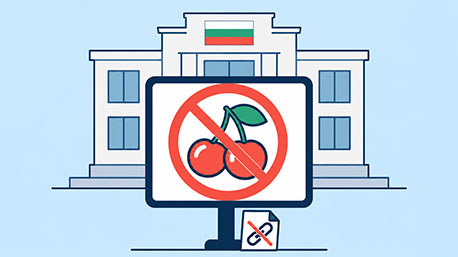
Bulgaria plans to close its gambling affiliate licensing system on 1 January 2027 under a bill that would also sharply restrict gambling advertising. Existing affiliate licences would end on that date if Parliament approves the changes, removing the licensing route for businesses promoting gambling.
The Council of Ministers approved the amendments on 11 November and sent them to Parliament. Most measures have a proposed start date of 1 January 2027. For players, the advertising provisions concern where gambling promotions can appear and what information licensed businesses can continue to display.
Affiliate Licensing Faces an Early End
Bulgaria introduced affiliate licensing on 1 August 2026. The proposed repeal would therefore end the framework just five months after its introduction. Alongside that repeal, lawmakers would rewrite Article 10 of the Gambling Act to prohibit gambling advertising across communication channels.
Operators could still provide information needed to organise and participate in games on their own websites and inside licensed premises. The bill also preserves broadcasts of state lottery draws and announcements of winnings.
Physical signs would face limits of 20% of a building’s façade and 50 square metres in total. An addiction warning would occupy at least 10% of the permitted area. The proposal would prohibit illuminated signs and moving displays.
Sports sponsorship would remain possible, subject to restrictions on branding. Operators could also sponsor cultural and educational events, as well as healthcare initiatives. Permitted branding would consist of a registered trademark or company name.
The National Revenue Agency would gain powers to block websites and apps carrying gambling advertising. Those powers would also cover social media profiles.
Operators Face Higher Licensing Costs
For online operators, the bill sets a €400,000 licence fee. A separate revenue-based charge would reach 21% of gross gaming revenue in 2027, subject to a €100,000 monthly minimum. The percentage would increase to 22% in 2028.
Casino licences would cost €300,000 for a five-year term, with a ten-year licence costing €600,000. Gaming halls in towns with no more than 500,000 residents would pay €75,000 for five years. The equivalent charge in larger cities would reach €150,000. Ten-year terms would double those amounts.
The land-based tax changes would follow a separate timetable. During 2027, operators would face taxes of €600 per gaming machine and €13,000 per casino table.
A two-part fee would replace the alternative tax from 2028. For gaming halls, the variable element would equal 20% of gross gaming revenue, with a monthly minimum of €200 per machine.
Payment Measures and Industry Objections
Payment firms would have to pass any charge above 1.5% of a gambling payment or payout to the state. They would also submit monthly reports. Foreign online operators would need a registered business establishment in Bulgaria, while venue operators would automatically send machine stake and payout figures to the tax agency.
Industry representatives have raised concerns about growth in unregulated gambling. Kiril Gruychev of the Association of Organisers of Gambling Games and Activities challenged the €100,000 monthly minimum and questioned its purpose. He said: “In my view, this is unconstitutional.”
Opposition MP Bozhidar Bozhanov cautioned that “the devil is always in the details”. Venko Sabrutev described his party’s billboard proposal as “an end to towns being taken over by gambling billboards”.
The Budget and Finance Committee backed the bill at first reading on 12 November. Six other committees are reviewing it, and Parliament still needs to consider the legislation at further readings.
Source:
Bulgaria Advances Sweeping Gambling Reform Package, LCB.org, November 16th, 2026.